Why RevPAR Is the Most Important Metric in Hotel Revenue Management

Introduction:
RevPAR and ADR are both important hotel metrics, but they measure different aspects of performance. ADR measures the average room rate sold, while RevPAR measures revenue generated from all available rooms. A hotel can have a high ADR but low RevPAR if occupancy is poor. Therefore, revenue managers use both metrics together to evaluate pricing and occupancy strategies.
In today's competitive hospitality industry, hotels are constantly looking for ways to increase revenue and maximize profitability. While there are many hotel performance metrics available, one metric stands above the rest:
RevPAR (Revenue Per Available Room):
RevPAR is considered one of the most important indicators in hotel revenue management because it measures how efficiently a hotel generates revenue from its available rooms.
Unlike occupancy rate or ADR alone, RevPAR provides a complete picture of hotel performance by combining both occupancy and room pricing into a single metric.
Hotels that focus on improving RevPAR often achieve higher profitability, better pricing strategies, and long-term business growth.
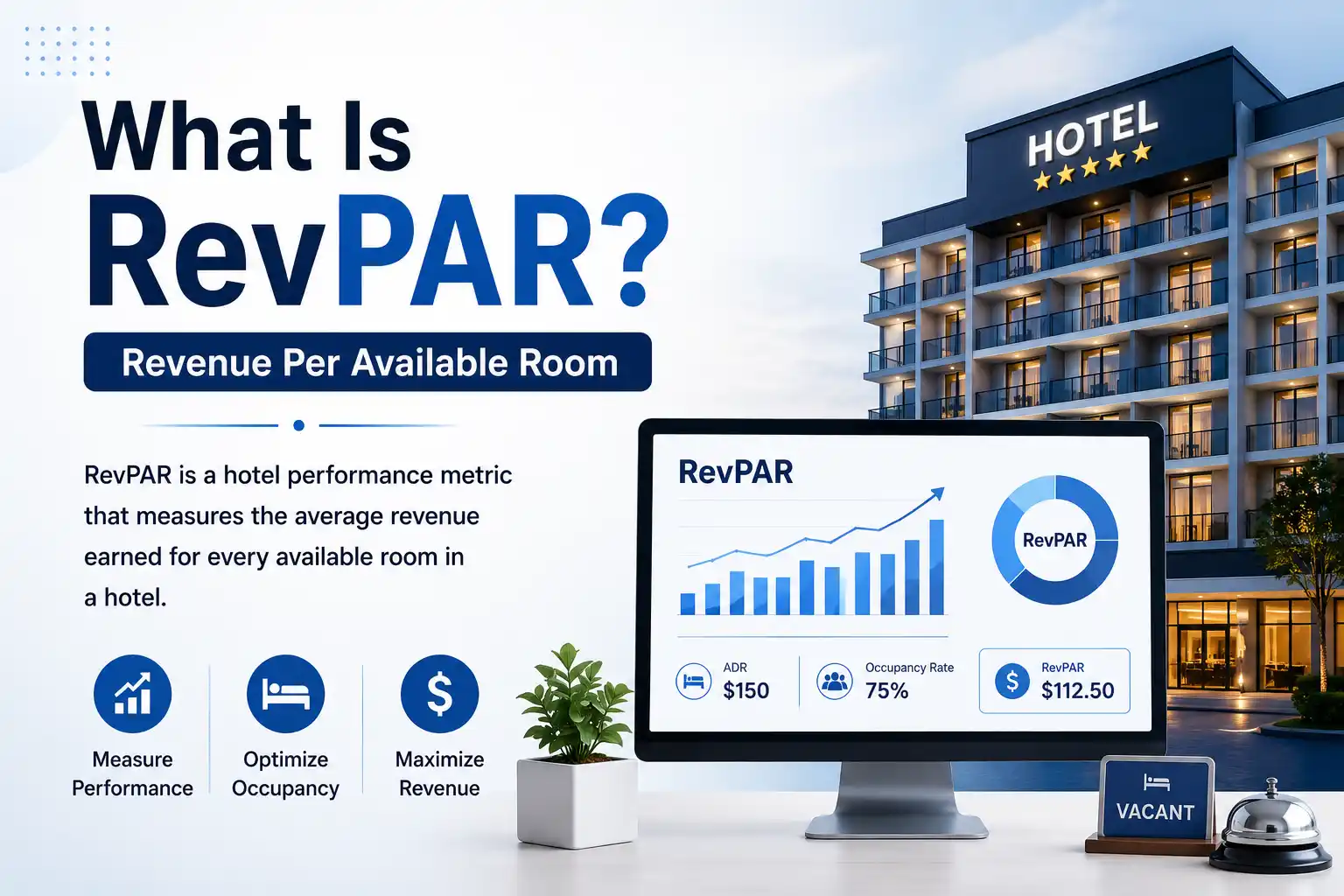
What Is RevPAR?
RevPAR stands for:Revenue Per Available Room
It is a hotel performance metric used to measure the average revenue generated by each available room in a hotel.
The metric helps hotels understand:
- 1) How efficiently rooms are generating revenue
- 2) Whether pricing strategies are effective
- 3) Occupancy performance
- 4) Overall hotel profitability
Because RevPAR combines occupancy and average room rate, it is widely used by hotel owners and revenue managers around the world.
Occupancy rate measures how many rooms are occupied, while RevPAR combines occupancy and room revenue into a single metric. Hotels with high occupancy but low room rates may still have poor RevPAR. This makes RevPAR a more comprehensive indicator of hotel performance and profitability.
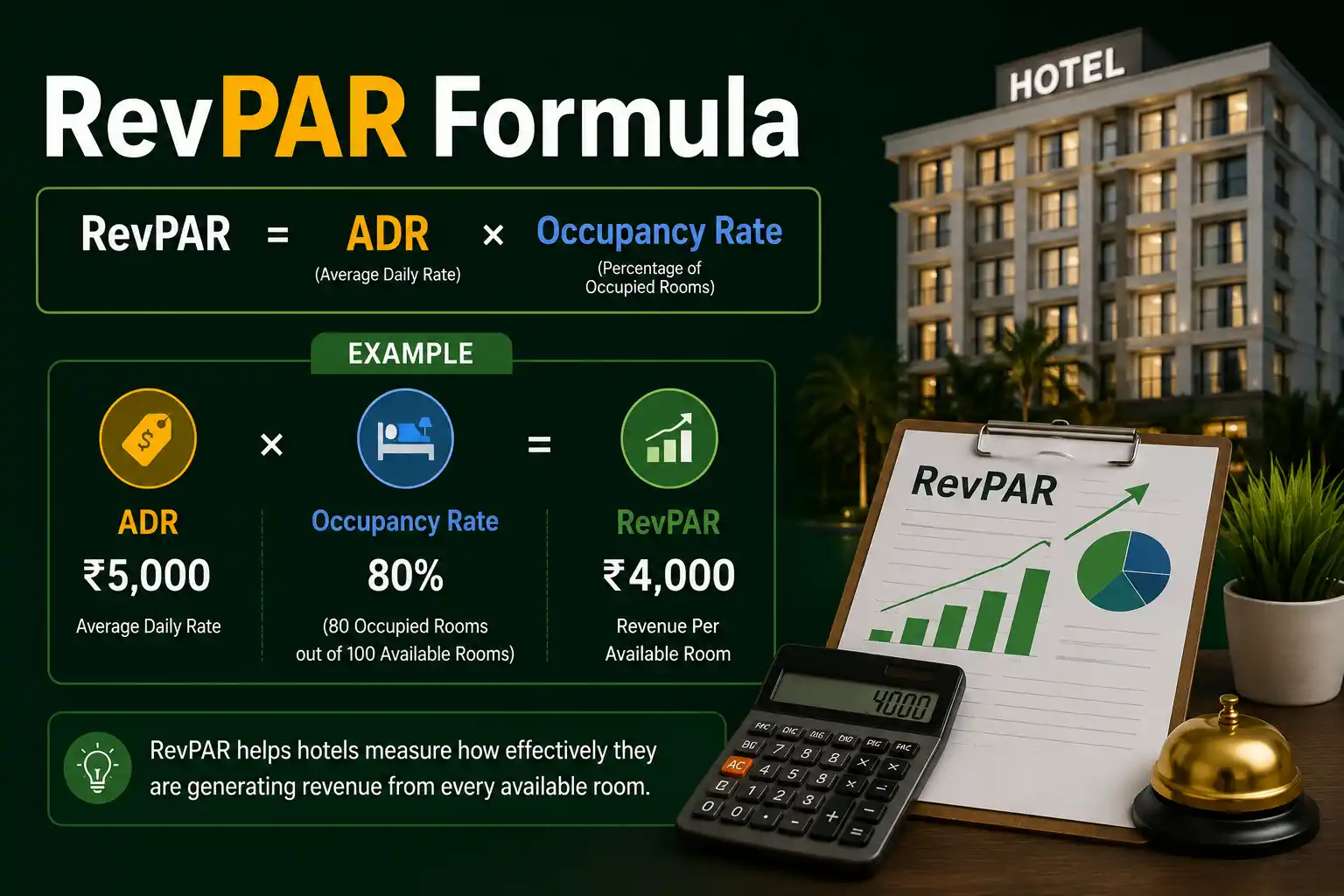
RevPAR Formula
Hotels can calculate RevPAR using two methods:
Method 1
RevPAR = Total Room Revenue ÷ Total Available Rooms
Method 2
RevPAR = ADR × Occupancy Rate
Where:
- ADR = Average Daily Rate
- Occupancy Rate = Percentage of occupied rooms
Example
Imagine:
- Total Rooms = 100
- Occupied Rooms = 80
- ADR = ₹5,000
Then:
RevPAR = ₹4,000
This means the hotel earns an average of ₹4,000 from each available room.
Why RevPAR Is More Important Than Occupancy Rate
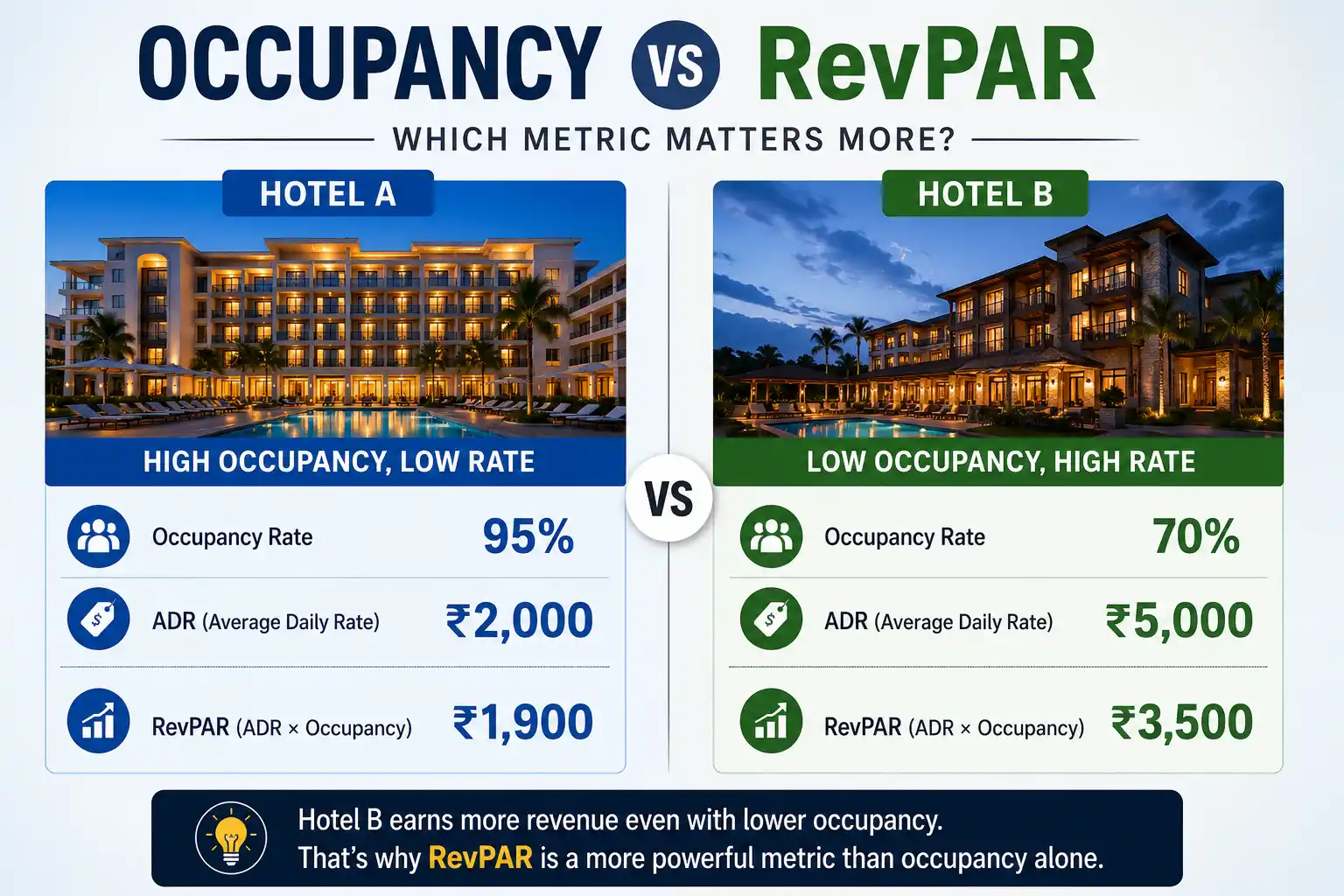
Many hotels focus only on occupancy. However, a hotel can have:
- 1)High occupancy
- 2)Low room prices
And still generate lower revenue.
Example
Hotel A
| Occupancy: | 95% |
| ADR: | ₹2,000 |
| RevPAR: | ₹1,900 |
Hotel B
| Occupancy: | 70% |
| ADR: | ₹5,000 |
| RevPAR: | ₹3,500 |
Although Hotel B sells fewer rooms, it earns more revenue. This is why RevPAR is considered more important than occupancy alone.
Why RevPAR Is Important in Hotel Revenue Management
RevPAR helps hotels:
Better Pricing:
Hotels can identify whether their pricing strategy is working.
Revenue Optimization:
Hotels can maximize revenue without relying solely on occupancy.
Competitive Analysis:
Hotels compare RevPAR against competitors to measure market performance.
Better Decision Making:
Revenue managers use RevPAR for pricing, promotions, and forecasting.
With AI-driven pricing, demand forecasting, and real-time analytics, RevPAR will continue to play a major role in hotel revenue management. Modern hotels use advanced software to track this metric daily and make data-driven decisions that maximize profitability and guest satisfaction.
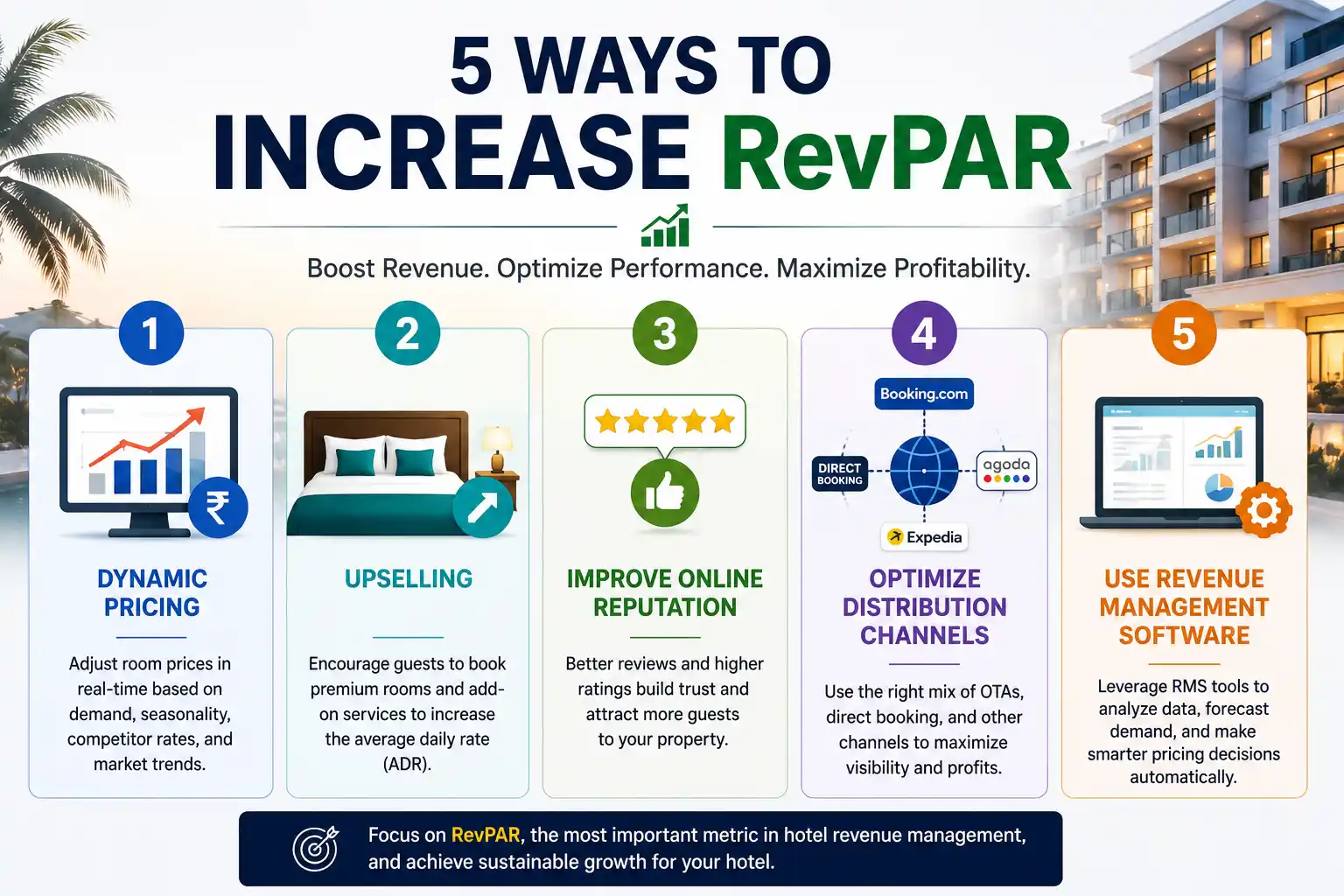
How to Increase RevPAR
Hotels can improve RevPAR by:
Learn more about our Hotel Revenue Management Services to improve your hotel's profitability.
1.Dynamic Pricing:
Adjust room prices according to demand.
2.Upselling:
Offer premium rooms and additional services.
3.Improve Online Reputation:
Better reviews attract more bookings.
4.Optimize Distribution Channels:
Use OTAs and direct bookings effectively.
5. Revenue Management Software:
Use RMS tools to automate pricing decisions.
RevPAR vs ADR
ADR measures:
Average room price.
RevPAR measures:
Revenue generated from every available room.
Because RevPAR includes occupancy and room rates, it provides a more complete view of hotel performance.
Common Mistakes Hotels Make
1) Focusing only on occupancy
2) Selling rooms too cheaply
3) Ignoring competitor pricing
4) Not using revenue management tools
5) Depending too much on OTAs
These mistakes can reduce RevPAR and overall profitability.
RevPAR vs ADR:
RevPAR and ADR are both important hotel performance metrics, but they serve different purposes. ADR measures the average revenue earned per sold room, whereas RevPAR measures revenue generated from all available rooms. A hotel may have a high ADR but low RevPAR if occupancy is low. Therefore, revenue managers use both metrics together to make better pricing and occupancy decisions.
RevPAR vs Occupancy Rate
Occupancy rate tells you how many rooms are occupied, while RevPAR gives a clearer picture by combining occupancy and room revenue. A hotel with high occupancy but low room rates may still have poor RevPAR. This is why RevPAR is considered one of the most important indicators in hotel revenue management.
Future of RevPAR
With AI-driven pricing and real-time analytics, RevPAR will continue to be a key metric for hotels. Modern revenue management systems help hotels monitor RevPAR daily and make smarter decisions that improve profitability and guest satisfaction.
Conclusion:
This hotel revenue metric is more than just a performance indicator.
It is one of the most powerful indicators of hotel performance and profitability.
By combining occupancy and room pricing, this metric provides a clear picture…
Hotels that monitor this hotel performance metric regularly… and implement strong revenue management strategies are better positioned to increase profitability, improve guest satisfaction, and achieve long-term growth.
If you want to succeed in hotel revenue management, understanding and improving RevPAR should be your top priority.
Need expert hotel revenue management services? Contact MindMesh Tech today to improve your hotel's occupancy, pricing strategy, and profitability.
Want to improve your hotel's profitability? Explore our Hotel Revenue Management Services.
RevPAR stands for Revenue Per Available Room.
RevPAR = ADR × Occupancy Rate
Or
RevPAR = Total Room Revenue ÷ Total Available Rooms
Yes. RevPAR considers both occupancy and room pricing, making it a more accurate indicator of hotel performance.
Hotels can improve RevPAR through dynamic pricing, upselling, reputation management, and revenue optimization strategies.